By Brian French | October 14, 2026
Quick Answer
To ship heavy art and antiques to Naples, use a specialty fine art shipper with climate-controlled, air-ride trucks; confirm wall-to-wall insurance before pickup; schedule deliveries away from active storm threats between June 1 and November 30; and stage high-value inventory in climate-controlled storage above flood risk until installation.
Why Naples Is a Uniquely Hard Place to Receive Fine Art
Naples is one of Florida’s strongest markets for fine art, antiques, and high-end interiors. It is also a logistics challenge. Collier County sits at the end of long overland routes, has no deepwater cargo port of its own, and faces six months of hurricane season every year.
The risks are not theoretical. Hurricane Ian in 2022 pushed storm surge in Naples as high as 6 feet, surpassing the previous record of 4.25 feet set during Hurricane Irma in 2017. Third Street South and Fifth Avenue South, home to many galleries and design showrooms, saw businesses scramble to reopen after the storm.
The National Hurricane Center called Ian the costliest hurricane in Florida’s history, responsible for more than $112 billion in damage.
For galleries, antique dealers, and interior designers, the question is not whether a storm will disrupt the supply chain, but how well prepared they are when one does.
The Main Risks to High-Value Inventory
| Risk | When It Strikes | Why It Matters |
|---|---|---|
| Transit damage | Every shipment | The largest single source of art insurance claims |
| Humidity and heat | Year-round, worst in summer | Warps panels, stresses canvas, damages veneers |
| Storm surge and flooding | Hurricane season | Destroys inventory stored at ground level |
| Power loss after storms | Days to weeks after landfall | Removes climate control from galleries and homes |
| Delivery delays | Before and after storms | Trucks rerouted, roads closed, carriers backlogged |
Insurance specialists estimate that 70% to 85% of art insurance claims are related to damage during transit and handling. In Southwest Florida, humidity compounds that risk. One Naples mover notes that outdoor air often carries moisture levels well beyond safe thresholds for fine art, especially in summer.
After a storm, conditions can get worse. One South Florida fine art handler said after Ian that post-storm humidity, lack of air conditioning, and water damage are “really, really bad for art,” which is why pre-storm planning matters.
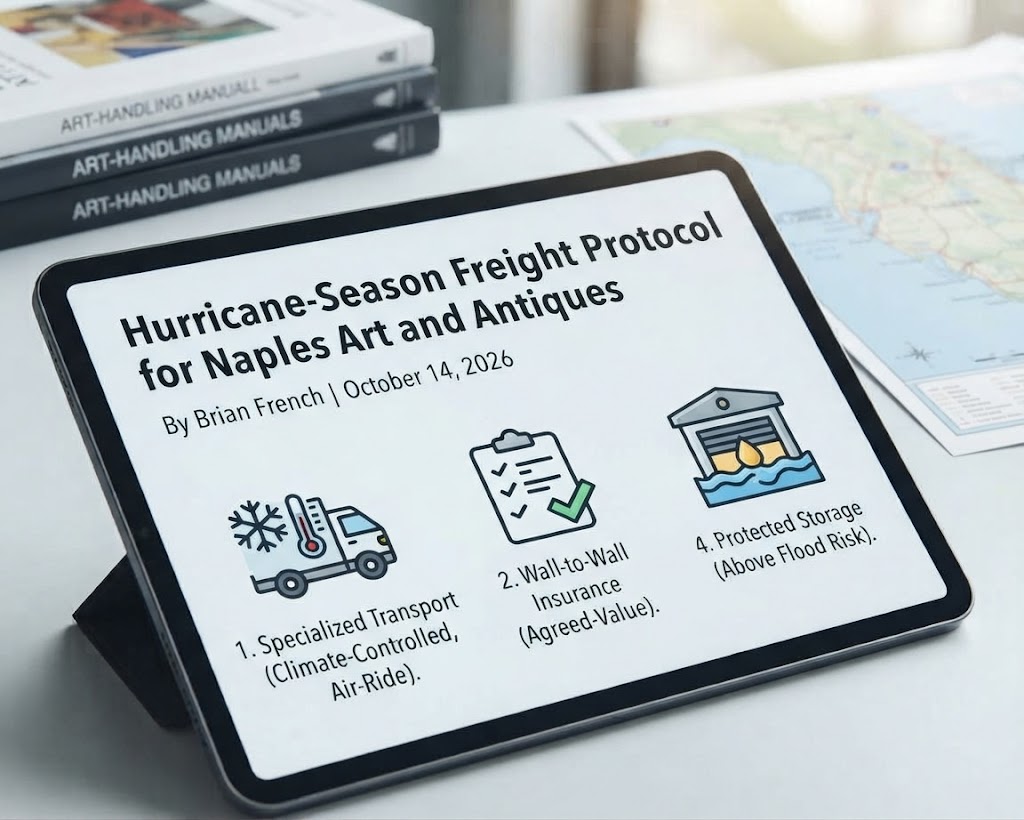
The 4-Step Hurricane-Season Freight Protocol
- Lock in insurance before anything moves. Confirm the policy provides wall-to-wall, agreed-value coverage that follows the piece from pickup through installation, including temporary storage. Verify transit limits, named storm deductibles, and whether storage at the shipper’s facility is covered. Get the shipper’s certificate of insurance and understand that carrier liability alone is usually far below an artwork’s value.
- Choose specialty transport and packing. Use art handlers with climate-controlled, air-ride vehicles, GPS tracking, and alarm systems. Require custom crating or museum-grade soft packing based on medium, weight, and fragility. Several firms run scheduled climate-controlled shuttles between the Northeast and Florida, including stops in Naples, which can reduce cost for galleries consolidating shipments.
- Time deliveries around the storm calendar. Avoid scheduling high-value arrivals during an active tropical threat to Southwest Florida. When a storm is forecast, hold shipments at the origin or at an inland staging facility rather than delivering to a coastal gallery or residence. Build flexibility into delivery dates and client commitments from June through November.
- Stage inventory in protected, climate-controlled storage. Before installation, keep pieces in a facility with stable temperature and humidity, backup power, fire suppression, and storage elevated well above flood levels. Many collectors keep art in professional storage for the entire hurricane season while they are away. Document condition with photos at every handoff.
Insurance: The Details That Decide a Claim
Homeowners and Standard Business Policies Fall Short
Standard homeowners insurance often treats fine art as ordinary personal property, with sub-limits, named-peril coverage, depreciated payouts, and little transit protection. Galleries and dealers face similar gaps with ordinary business property policies.
What to Look For
- Wall-to-wall or nail-to-nail coverage: Protection from the moment a piece leaves the seller until it reaches its destination.
- Agreed value: Payment based on an appraised value set in advance, not depreciated cash value.
- Transit limits: Some dealer policies limit transit coverage to a share of the total limit, such as up to 25% of the policy limit.
- Consignment coverage: Galleries often hold works they do not own and need coverage for consigned pieces.
- Storage and multi-location coverage: Confirm that off-site storage and second homes are named or covered.
- Named storm terms: Review windstorm and flood exclusions, deductibles, and any requirements to move art before a storm.
Update Values Regularly
An outdated schedule is a hidden risk. Wall-to-wall transit terms do not fix an outdated value, so collectors and dealers should update appraisals as prices rise.
Lessons From Local Institutions
Naples’ Baker Museum emerged from Hurricane Ian largely unscathed, partly due to lessons its leaders learned five years earlier during Irma. Elsewhere on the Gulf Coast, the Ringling in Sarasota moved special objects into vaults rated for 140 mph winds as Ian approached.
Collector behavior has changed too. One fine art handler observed that during Irma, people wrapped expensive pieces in whatever they could find, while before Ian, clients prepared more seriously.
Special Considerations for Antique Dealers
- Wood and veneers: Antique furniture is especially vulnerable to humidity swings. Acclimate pieces gradually after arrival.
- Heavy and oversized items: Large sculptures, architectural salvage, and case furniture may require rigging, liftgates, and site surveys before delivery.
- Restricted materials: Items containing ivory, tortoiseshell, or certain protected wildlife materials can face federal restrictions on interstate sale and transport. Confirm compliance before buying out of state.
- Documentation: Keep provenance, condition reports, and bills of lading together for insurance and resale.
Questions to Ask a Fine Art Shipper
- Are your trucks climate-controlled and equipped with air-ride suspension?
- Do you have a storm protocol for holding or rerouting shipments?
- Where is your storage facility, and what is its flood zone and backup power?
- Who packs and crates, and are they trained art handlers?
- What insurance do you carry, and what does your liability actually cover?
- Can you provide condition reports and photos at pickup and delivery?
Brian’s Take
For Naples’ luxury trade, logistics is part of the product. A gallery or dealer that can promise safe delivery and protected storage through hurricane season is offering something buyers increasingly value, especially seasonal residents who are away during the riskiest months.
From an investment standpoint, the economics favor preparation. The cost of specialty shipping, proper crating, and seasonal storage is small compared with the value of inventory at risk and the business interruption after a storm. Ian showed how quickly unprepared businesses can lose inventory and months of sales, while prepared institutions came through with little damage.
I would also encourage dealers to treat insurance as a logistics decision, not just a financial one. The policy terms on transit, storage location, and named storms should shape when and how inventory moves. In a market defined by high-value goods and seasonal storms, the businesses that plan their supply chain around the hurricane calendar will be the ones that stay open when it matters.
Frequently Asked Questions
How do I ship heavy art and antiques to Naples, Florida?
Hire a specialty fine art shipper with climate-controlled, air-ride vehicles and trained art handlers, use custom crating for fragile or heavy pieces, confirm wall-to-wall insurance, and schedule delivery away from active storm threats.
Are there fine art logistics companies serving Naples?
Yes. Options include Naples-based moving and storage firms with fine art services, Florida-based art handlers that run west coast shuttles, and national firms offering scheduled climate-controlled shuttles from the Northeast to Florida.
When is hurricane season in Naples?
The Atlantic hurricane season runs from June 1 to November 30.
Does homeowners insurance cover art in transit?
Usually not adequately. Standard homeowners policies often have sub-limits and limited transit coverage. Specialty fine art policies offer wall-to-wall, agreed-value coverage.
What is wall-to-wall art insurance?
Coverage that protects a piece from the moment it leaves its origin, through packing, transit, and storage, until it is installed at its destination.
How should Naples galleries protect inventory during a hurricane?
Move high-value pieces to climate-controlled storage with backup power and elevation above flood risk, document condition, hold incoming shipments, and confirm insurance terms before the storm arrives.
Sources and Further Reading
- Florida Mayor Says Hurricane Ian Damage in Naples Could Surpass $20 Million — Fox News: https://www.foxnews.com/us/florida-mayor-says-hurricane-ian-damage-naples-alone-could-surpass-20-million.amp
- Hurricane Ian Tropical Cyclone Report — National Hurricane Center: https://www.nhc.noaa.gov/data/tcr/AL092022_Ian.pdf
- Hurricane Ian Aftermath: Parts of Naples Look Like a War Zone — Naples Daily News via Yahoo: https://news.yahoo.com/hurricane-ian-aftermath-tour-damage-221545650.html
- In Hurricane Ian’s Wake, West Florida Art Museums Begin Recovery — The Art Newspaper: https://www.theartnewspaper.com/2022/09/30/hurricane-ian-museums-galleries-art-spaces-west-florida
- Florida’s Super-Rich Evacuate Their Art as Hurricane Ian Hits — The Daily Beast: https://www.thedailybeast.com/floridas-super-rich-evacuate-their-art-as-hurricane-ian-hits/
- The Art of Protection: Insurance Essentials for Art Galleries — MKR Specialty Insurance: https://mkrspecialtyinsurance.com/the-art-of-protection-insurance-essentials-for-art-galleries-and-museums/
- Homeowners vs Fine Art Insurance: Gaps in 2026 — Art Insurance Now: https://www.artinsurancenow.com/blog/homeowners-insurance-vs-specialty-fine-art-insurance-gaps-2026/
- Art Gallery Insurance — Distinguished Programs: https://distinguished.com/blog/art-gallery-insurance-coverage-perfect-for-any-gallery/
- Fine Art Insurance Coverage Explained — Liberty Insurance: https://libertyinsurance.com/fine-art-insurance-coverage/
- Museum Quality Art Packing in Naples — Frank and Sons Moving and Storage: https://frankandsonsmovingandstorage.com/museum-quality-art-packing-naples/
- Fine Arts Shuttle in Naples — William C. Huff Companies: https://www.williamchuff.com/art-shuttle/naples
- Florida Fine Art Shuttle — Atelier 4: https://www.atelier4.com/services/interstate-shuttles/florida
- Art Services Transportation & Shipping — Bellissima Fine Art: https://www.bellissimafineart.com/fine-art-antique-services/transportation-shipping/
About the Author