Photo: Sasun Bughdaryan on Unsplash, used under the Unsplash License
Quick Answer: Florida voters approved Amendment 3 with 62% of the vote on November 3, 2026. Florida TaxWatch estimates it will cut property tax revenue in Southwest Florida’s five counties by about $3.03 billion over five years, led by Lee County at $1.74 billion and Collier at $751.7 million. Lee County staff have projected general fund cuts of $121 million in 2027-28 and $159 million in 2028-29.
Amendment 3 is now part of Florida’s Constitution, and Southwest Florida voted for it more heavily than most of the state. Collier County voters backed it with 70% and Charlotte County with 74%, compared with 62% statewide, according to WGCU. The measure lowers tax bills for homeowners starting in 2027, and it leaves county commissions, city councils and special districts in Lee, Collier, Charlotte, Hendry and Glades counties with less property tax revenue to run services that residents and businesses depend on.
This analysis lays out what changed, how much revenue each Southwest Florida county stands to lose, what Lee County has already said about cuts, and what business owners should watch as local budgets are rebuilt for 2027-28.
What does Amendment 3 change?
Amendment 3 makes four main changes to Florida property taxes, according to Ballotpedia’s summary of the measure the Legislature placed on the ballot during a June 1 to 3, 2026 special session.
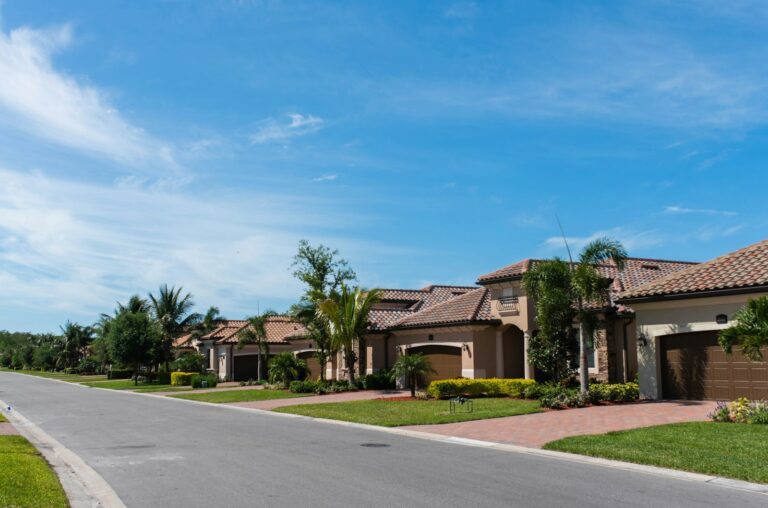
- Bigger homestead exemption for non-school taxes: the non-school homestead exemption rises from $25,000 to $150,000 in 2027 and $250,000 in 2028, with inflation indexing starting in 2029. School taxes keep the existing $25,000 exemption.
- Phase-in for newcomers: people who move to Florida after December 31, 2026 receive a smaller initial exemption and must live in the state for five years before qualifying for the full amount.
- Tighter cap on non-homestead assessments: the annual cap on assessment increases for rental units, vacation homes, commercial property and apartment buildings drops from 10% to 5% starting January 1, 2027. Like the exemption, it does not apply to school taxes.
- Limits on spending: counties and cities may spend property tax revenue only on public safety, education, infrastructure, natural resources and flood control, debt service, employee retirement obligations, and government operations and administration.
The Legislature also must create a procedure allowing counties and cities to raise homestead exemptions further if they choose.
| Provision | Before | 2027 | 2028 and later |
|---|---|---|---|
| Non-school homestead exemption | $25,000 | $150,000 | $250,000; indexed from 2029 |
| School-tax homestead exemption | $25,000 | $25,000 | $25,000 |
| Non-homestead assessment cap (non-school) | 10% a year | 5% a year | 5% a year |
| New residents after Dec. 31, 2026 | — | Smaller initial exemption | Full exemption after five years |
Source: Ballotpedia summary of the legislatively referred amendment (HJR 1F); Florida Authority Network™ compilation.
How much revenue will Southwest Florida lose?
About $3 billion over five years, based on Florida TaxWatch county estimates reported by WKMG ClickOrlando. Statewide, TaxWatch projects reductions of $4.93 billion in fiscal 2027-28, rising each year to $11.83 billion in fiscal 2031-32, for a five-year total of $45.84 billion. Legislative staff produced a somewhat lower estimate before the vote: $4.6 billion in 2027-28 and $8.4 billion in 2028-29, according to Ballotpedia.
| County | Statewide rank | 5-year revenue reduction | Share of SWFL total |
|---|---|---|---|
| Lee | 7 | $1.74B | 57.5% |
| Collier | 20 | $751.7M | 24.8% |
| Charlotte | 25 | $452.6M | 15.0% |
| Hendry | 41 | $65.5M | 2.2% |
| Glades | 57 | $17.1M | 0.6% |
| Five-county total | — | $3.03B | 100% |
Source: Florida TaxWatch five-year estimates through fiscal 2031-32, as reported by WKMG ClickOrlando; shares calculated by Florida Authority Network™.
Southwest Florida’s five counties account for about 6.6% of the statewide five-year reduction. Lee County alone ranks seventh among Florida’s 67 counties, behind only Miami-Dade, Broward, Palm Beach, Hillsborough, Orange and Pinellas.
Why is Collier’s loss so much smaller than Lee’s?
The TaxWatch estimates put Collier’s five-year reduction at less than half of Lee’s, even though both are large, fast-growing coastal counties. The estimates are not broken down by cause in the figures reported, but the amendment’s structure points to the likely factors: it reduces revenue mainly through homestead exemptions and the non-homestead cap, so the size of the loss depends on how many homesteaded properties a county has, how much of its tax base is non-homestead property, and its millage rates. Collier Commissioner Rick LoCastro said at a July forum that his county is “definitely more prepared” after a budget review the commission began three years ago.
How fast does the statewide revenue loss grow?
The reduction grows each year as the exemption doubles in 2028, inflation indexing begins in 2029 and the lower cap compounds on non-homestead values. Florida TaxWatch’s statewide year-by-year estimates show the pattern.
| Fiscal year | Statewide reduction (TaxWatch) |
|---|---|
| 2027-28 | $4.93B |
| 2028-29 | $8.71B |
| 2029-30 | $9.65B |
| 2030-31 | $10.71B |
| 2031-32 | $11.83B |
| Five-year total | $45.84B |
Source: Florida TaxWatch estimates as reported by WKMG ClickOrlando.
Applied to the region, that pattern means Southwest Florida governments face a smaller hit in the first budget year and a much larger one from 2028-29 onward, which matches the shape of Lee County’s own projection: $121 million in the first year, rising to $159 million in the second.
How does Southwest Florida compare with nearby counties?
Lee’s projected loss is larger than those of its Gulf Coast neighbors to the north. TaxWatch estimates five-year reductions of $825.5 million for Manatee County and $807.1 million for Sarasota County, both slightly above Collier’s $751.7 million. Monroe County, home to the Florida Keys, is estimated at $144.7 million. Among all 67 counties, the five-year estimates range from $5.16 billion in Miami-Dade to $4.5 million in Liberty County.
What has Lee County said about cuts?
Lee County is the most detailed public example in the region. At a September 2026 workshop, before the vote, county staff told commissioners they would need to cut $121 million from the budget in 2027-28 and $159 million the following year if Amendment 3 passed, WGCU reported. Those estimates were built on the current $766 million general fund and $99 million raised through Municipal Service Taxing Units (MSTUs), and did not account for growth or inflation.
| Lee County projection | 2027-28 | 2028-29 |
|---|---|---|
| Projected budget cut | $121M | $159M |
| Cut as share of $766M general fund | 15.8% | 20.8% |
| Remaining for non-mandated services* | $249M | $211M |
Source: Lee County staff presentation as reported by WGCU, September 4, 2026. *Amount WGCU reported as available for public safety, animal services, parks and other services after mandated items, constitutional offices and court budgets. Percentages calculated by Florida Authority Network™.
Chief Financial Officer and Assistant County Attorney Pete Winton called the deficits “pretty ugly.” Staff presented options including more MSTUs, higher user fees, general obligation bonds, a higher tax rate, service reductions and program eliminations. Lee’s county tax rate has been unchanged since 2022, according to WGCU.
What did Lee commissioners say?
Commissioner Brian Hamman compared the cut to a salary falling from $100,000 to $80,000 one year and $74,000 the next. Commissioner Cecil Pendergrass asked staff to examine effects on the county’s 20/20 land-buying program and parks, and warned residents could end up paying more through MSTUs and fees. Commissioner Kevin Ruane said, “The local economy will take a hit in ways people don’t realize.”
How will cities and small counties be affected?
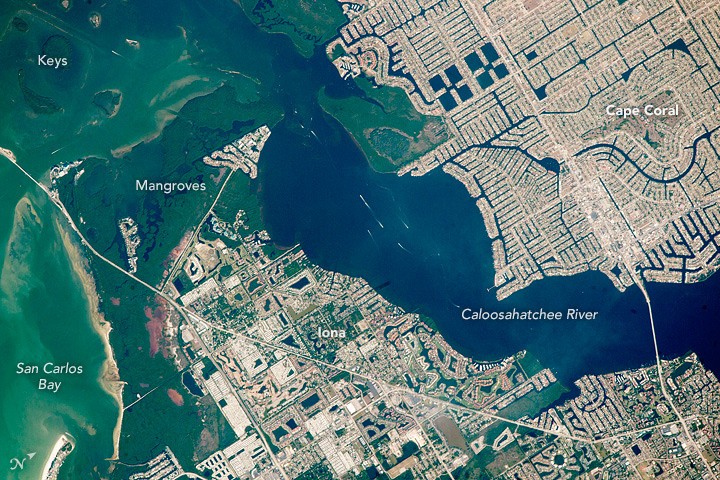
Cities face their own gaps. Cape Coral Mayor John Gunter said at the July forum that his city could lose about $28 million in 2027 with a $150,000 exemption and about $47 million in 2028 with a $250,000 exemption, while saying core services such as public safety “would be fine.” Naples Business News has covered Cape Coral’s FY2027 budget separately.
Small inland counties may have the hardest time. Forum speakers said fiscally constrained counties, including Hendry and Glades, could be hit harder than Lee and Collier because of differences in property values. Florida TaxWatch President Jeff Kottkamp warned that small, rural counties may have to seek money from the state “unless we develop some sort of a dedicated fund.” A proposed fund to help local governments was removed from the amendment during the legislative process, WGCU reported.
What does Amendment 3 mean for Southwest Florida businesses?
The effects split by type of property and type of business.
Commercial and rental property owners
Owners of commercial buildings, apartments, vacation rentals and second homes benefit from the lower 5% cap on annual assessment increases for non-school taxes, starting January 1, 2027. In a rising market, that slows growth in their taxable values. They do not get the expanded homestead exemption.
Businesses that depend on local services
Companies that rely on county parks, libraries, permitting, road maintenance and tourism-related amenities may see changes as counties rebalance budgets. The spending limits steer property tax money toward public safety, infrastructure, flood control and core operations, so services outside those categories are more exposed.
Fees and assessments
Lee commissioners’ own list of options, including MSTUs and user fees, signals that some of the property tax reduction may come back as other charges. Elsewhere in Florida, Fortune reported that Sanford is considering a fire assessment fee charged to homeowners and businesses, and the town of Oakland is preparing a December vote that could clear the way for fire protection and stormwater assessments.
Employers recruiting new residents
Workers who move to Florida after December 31, 2026 face a five-year phase-in before they receive the full homestead exemption. For Southwest Florida employers recruiting from out of state, that means new hires will not get the same property tax treatment as longtime residents during their first years of homeownership.
Brian’s Take
I think Southwest Florida voters made a clear choice, and the region’s local governments now have to live with it. Collier at 70% and Charlotte at 74% were well above the statewide 62%. That tells me residents here wanted relief more than they feared the cuts that county staff described before the vote.
The numbers that matter most to me are Lee’s. A projected $121 million cut against a $766 million general fund is not a trim; it is a 16% reduction in the first year and 21% in the second, before any growth. When the same commissioners who held the tax rate flat since 2022 put user fees, MSTUs and bonds on the table, business owners should expect some of the savings to come back as charges with different names.
My view would change if the Legislature creates a dedicated fund for constrained counties or if property values grow fast enough to soften the gap. Until then, I would plan on fewer discretionary services, more fees, and a budget season in 2027 that matters more to Southwest Florida companies than any in recent memory.
Frequently Asked Questions
Did Amendment 3 pass in Florida?
Yes. Amendment 3 passed with 62% of the vote on November 3, 2026, above the 60% required. Collier voters supported it with 70% and Charlotte voters with 74%.
When does the new homestead exemption take effect?
The non-school homestead exemption rises to $150,000 in 2027 and $250,000 in 2028, with inflation indexing beginning in 2029.
How much will Lee County lose under Amendment 3?
Florida TaxWatch estimates Lee County’s five-year property tax reduction at $1.74 billion, seventh-largest in Florida. County staff projected general fund cuts of $121 million in 2027-28 and $159 million in 2028-29.
Does Amendment 3 lower taxes on commercial property?
Not through the exemption. Commercial and other non-homestead property benefits from a lower 5% annual cap on assessment increases for non-school taxes, starting January 1, 2027.
Do school taxes change under Amendment 3?
No. The larger exemption and the 5% cap apply only to non-school taxes. The existing $25,000 exemption continues for school taxes.
What happens to people who move to Southwest Florida after 2026?
New residents who move to Florida after December 31, 2026 receive a smaller initial homestead exemption and must live in the state for five years before qualifying for the full non-school exemption.
Sources and Further Reading
- Florida Voters to Decide Expanded Homestead Tax Exemption Amendment in November, Ballotpedia News
- Florida Gives a Resounding ‘Yes’ to Property Tax Amendment; Governments Will Lose Billions, WGCU
- Lee Commissioners See ‘Ugly’ Deficits With Budget Cut Likely if Amendment 3 Passes, WGCU
- Regional Leaders Discuss How Proposed Property Tax Amendment Can Affect Southwest Florida, WGCU
- Report: These Places May Lose the Most Under Florida’s New Property Tax Plan, WKMG ClickOrlando
- Florida Voters’ Push for Lower Property Taxes May Force Local Governments to Rely More on the State, Fortune
About the Author