By Brian French | NaplesBusinessNews.com | October 23, 2026
Quick Answer
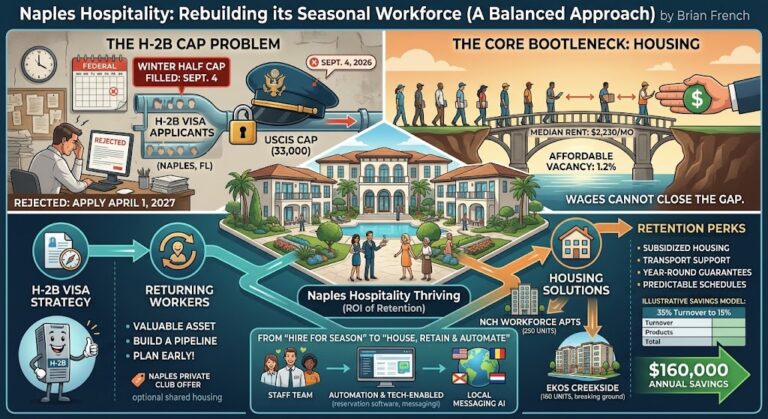
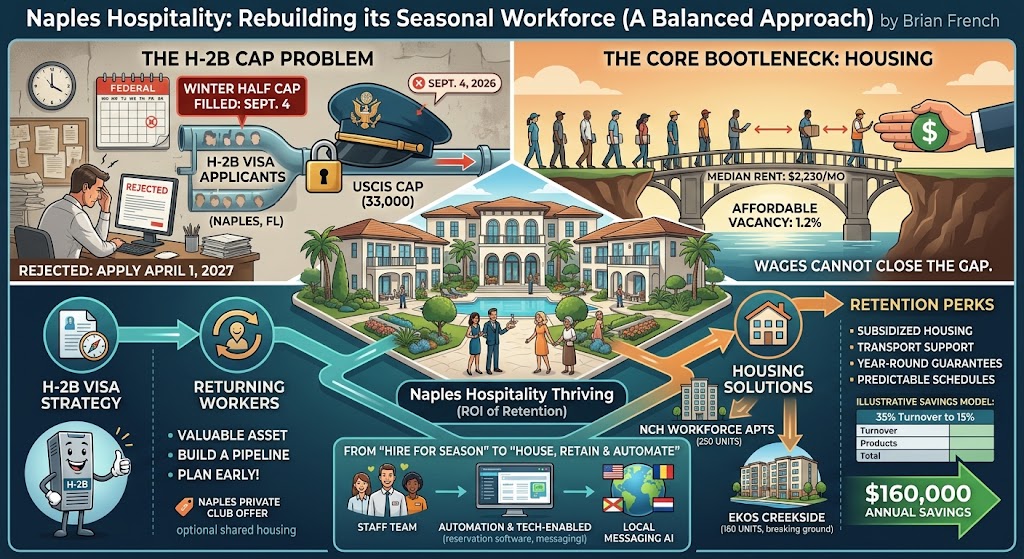
Naples hotels, clubs and restaurants are shifting from “hire for the season” to “house, retain and automate.” Employers are leasing or building staff housing, offering transportation and year-round guarantees, relying on returning H-2B workers, and using booking and guest-messaging technology to stretch smaller teams. The biggest constraint is housing: median rent in Collier County runs about $2,230 a month, and the federal H-2B cap for the 2026–27 winter season filled on September 4.
Key Numbers at a Glance
| Metric | Figure |
|---|---|
| Collier tourism-supported jobs, FY 2024–25 | 27,500 |
| Bed tax revenue growth, FY 2024–25 | 13% |
| Projected FY 2027 tourist tax revenue | $41.8 million |
| Collier County median rent | $2,230/month |
| Affordable rental vacancy rate | 1.2% |
| H-2B winter-half cap (Oct. 2026–Mar. 2027) | 33,000, filled Sept. 4 |
Introduction: Peak Demand, Thin Benches
Naples is heading into its 2026–27 season with strong demand. Collier tourism rebounded in the first quarter of 2026, with consultants reporting that January through March beat the prior year on every measure, from visitation and spending to occupancy, average daily rate and revenue. Domestic visitation rose 7.1%, led by a 14.6% jump in visitors from the Northeast.
The money is real. Collier collected just under $50 million in tourist development tax in the fiscal year that ended September 30, 2025, up 13%. County tourism officials say the industry supported 27,500 Collier jobs that year, and the county projects $41.8 million in tourist tax revenue for fiscal 2027.
Voters will also decide on November 3 whether to raise the bed tax from 5% to 6%. If approved, the extra penny would take effect January 1, 2027, and is estimated to bring in about $9.7 million a year.
The problem is not demand. It is staffing. Naples hospitality runs on a sharp seasonal curve, with hotels, private clubs and fine-dining restaurants needing their largest teams from November through April. Those same months are when rents peak, roads clog and every employer in Southwest Florida competes for the same servers, cooks, housekeepers and front-desk agents.
The result is a workforce model under strain. Employers who rely only on posting jobs in September and hoping for applicants are losing. Those adapting are rebuilding how they find, house, retain and support their people.
Housing Affordability: The Core Bottleneck
The Numbers Behind the Problem
Every Naples hospitality operator eventually arrives at the same conclusion: wages alone cannot close the housing gap. The county’s own figures show a median rent of $2,230, an affordable-unit vacancy rate of just 1.2% and a median purchase price of $571,500. About 52,749 workers commute into Collier daily, including nearly 30% from Florida’s east coast.
At $2,230 a month, a worker following the common guideline of spending no more than 30% of income on rent would need to earn roughly $89,000 a year. Few line-level hospitality jobs pay that, even with tips.
What It Does to Retention
Long commutes are a leading cause of turnover in seasonal hospitality. A worker driving an hour or more each way from Lee, Hendry or Charlotte County is more likely to accept a job closer to home, call out during peak traffic or leave mid-season. Every departure means another recruitment cycle, more training time and service gaps during the busiest months.
Healthcare offers a useful comparison because it competes for many of the same workers. NCH, the largest non-government employer in Collier County, has said 30% of its workforce drives more than an hour each way because they cannot afford to live in Naples, sending more than $88 million in payroll out of the county. The health system announced plans for a 250-unit workforce apartment development off Immokalee Road for its more than 4,000 employees.
New Supply Is Coming, Slowly
Public and private projects are starting to add units. Construction began March 4, 2026, on Ekos Creekside, a $63 million, 160-unit workforce community on Collier Boulevard in East Naples and the first Collier project to break ground under Florida’s Live Local Act. The county bought the land in 2024 and leased it long-term to the developer to keep it affordable.
At the former Golden Gate Golf Course, the county is advancing a project with 252 rental units for essential workers, with income limits targeting 50% to 120% of area median income.
These projects help, but they will not absorb the full need. Estimates have placed Collier’s shortage of affordable and workforce units near 49,400. Hospitality employers cannot wait for public supply to catch up.
Automation and Tech-Enabled Service
Using Technology to Protect the Guest Experience
Luxury hospitality has historically resisted automation because guests pay for personal attention. The Naples approach in 2026 is to automate the behind-the-scenes work so that fewer staff can spend more time on visible service.
The most common tools fall into four groups:
- Reservations and table management. Online booking platforms reduce phone volume and help restaurants manage covers, deposits and waitlists during peak season.
- Guest messaging. Text-based concierge and AI-assisted messaging handle routine requests such as late checkout, towel delivery, dinner reservations and directions, routing complex issues to staff.
- Kitchen systems. Kitchen display screens, prep-tracking software and inventory tools reduce errors and cut the time cooks spend on paperwork. Some operators are testing automated fryers and dishwashing systems for repetitive tasks.
- Labor scheduling. Scheduling software that forecasts demand from reservations, occupancy and events helps managers avoid overstaffing slow shifts and understaffing busy ones.
Where Automation Falls Short
Technology cannot replace a skilled sommelier, a seasoned banquet captain or a housekeeper who knows a returning guest’s preferences. In Naples, where guests expect high-touch service, automation works best as a support layer. Operators who cut staff too far risk the reviews and repeat bookings that make Naples a premium market.
The Practical Benefit
The clearest return on technology is reduced turnover from burnout. When staff are not buried in phone calls, manual inventory counts and scheduling chaos during peak season, they are more likely to stay through April and return the next year.
H-2B Visas and International Recruitment
How the Program Works
The H-2B program lets U.S. employers hire foreign workers for temporary, non-agricultural jobs when they cannot find enough domestic workers. Congress caps it at 66,000 visas a year, split into two halves: 33,000 for jobs starting October 1 through March 31, and 33,000 for jobs starting April 1 through September 30.
The timing creates a structural problem for Naples. The winter half lines up with peak season, and demand far exceeds supply. For the 2026–27 season, USCIS received enough petitions to fill the first-half cap by September 4, 2026. New cap-subject petitions with start dates before April 1, 2027, are being rejected.
Supplemental Visas: Uncertain for 2027
In recent years, the federal government has added supplemental visas above the cap. For fiscal 2026, DHS and the Department of Labor authorized up to 64,716 additional visas, of which 46,226 were reserved for returning workers who held H-2B status in fiscal 2023, 2024 or 2025. Employers had to attest that they would suffer severe financial loss without the workers.
As of the September announcement, USCIS had not said whether supplemental H-2B visas will be available for fiscal 2027. Naples employers who missed the first-half cap should plan as though no additional visas will come through.
What H-2B Jobs Look Like in Naples
Public job postings show how local employers structure these positions. One Naples private club employer on Grey Oaks Drive North advertised for 50 H-2B servers from October 1, 2026, through May 31, 2027, paying $20.13 to $32.00 per hour. It offered optional housing at $675 a month for a shared room or $745 for a single room, with a refundable $350 deposit.
That example shows the model many employers now use: international recruitment paired with employer-arranged housing at a fraction of market rent.
Compliance Essentials
Employers using H-2B must follow strict rules:
- Labor certification. File with the Department of Labor, showing recruitment of U.S. workers and paying the required prevailing wage.
- Domestic recruitment. Advertise and hire qualified U.S. applicants who apply during the recruitment period.
- Wage and hour obligations. Pay at least the certified wage and cover required travel and visa costs as set out in program rules.
- Housing standards. If housing is offered, it must meet local codes, and any deductions must follow federal requirements.
- Recordkeeping. Keep payroll, recruitment and housing records ready for audit.
Most Naples employers work with immigration counsel or specialized agents because a filing error can cost an entire season.
Returning Workers Are the Real Asset
The most valuable H-2B workers are those who return year after year. They know the property, the guests and the systems. Federal supplemental rules have also favored returning workers in recent years. Employers that treat seasonal international staff well, with clean housing, fair scheduling and clear communication, build a pipeline that is far more reliable than any job board.
The ROI of Employee Retention Perks
Why Retention Pays
Every time a seasonal employee leaves mid-season, the employer absorbs recruitment costs, training hours, overtime for remaining staff and lost service quality. In a luxury market where a single bad experience can cost a repeat guest worth thousands of dollars a year, the true cost of turnover is often understated.
Illustrative Turnover Cost Model
This is a FAN illustrative example to show how retention spending can pay off, not reported data from a specific employer.
| Assumption | Value |
|---|---|
| Seasonal staff at a Naples resort | 200 |
| Mid-season turnover without perks | 35% (70 workers) |
| Estimated cost per replacement | $4,000 |
| Annual turnover cost | $280,000 |
| Turnover with housing and transport perks | 15% (30 workers) |
| Annual savings | $160,000 |
Housing subsidies and transportation stipends cost money, but when they reduce turnover significantly they can cover much of their own expense before counting the benefit of better service and higher guest satisfaction.
Perks That Work in Naples
Subsidized or employer-leased housing. This remains the most powerful tool. Employers lease apartments in bulk, convert older properties or partner with developers. Moorings Park, a Naples senior living operator, showed one model by partnering with a developer to buy a Super 8 hotel for $9.6 million and convert it to studio apartments for its workers, with a local hospital network leasing additional units.
Transportation support. Employer shuttles from Immokalee, Golden Gate Estates or Lee County, gas stipends and transit passes reduce the burden of long commutes and improve on-time attendance.
Year-round guarantees. Some operators now guarantee year-round employment by cross-training staff for summer roles in banquets, maintenance, renovations or sister properties. A guaranteed paycheck in August is a strong reason to stay through the next season.
Predictable schedules. Posting schedules two weeks ahead and limiting last-minute changes help workers who juggle childcare and long commutes.
Career pathways. Clear promotion paths from server to captain, cook to sous chef, or front desk to supervisor give employees a reason to see Naples as a career rather than a season.
Meals, uniforms and wellness benefits. Smaller perks add up, especially for workers paying high rent.
Shared Solutions
Smaller restaurants cannot build housing alone. A growing idea in Southwest Florida is shared workforce housing, where several employers jointly lease or fund units for their staff. Business associations, chambers of commerce and the county’s housing programs can help organize these partnerships.
Brian’s Take
The Naples hospitality industry has a revenue problem most markets would envy and a staffing problem most markets would not. Tourism dollars are rising, room rates are holding, and the county is asking voters for another penny of bed tax. None of that matters if the resort cannot staff its restaurants in February.
What stands out to me is how many Naples employers are quietly becoming housing providers. Private clubs offering $675 rooms to H-2B workers, a health system planning 250 apartments and a senior living company converting a motel are all signals that the private sector has stopped waiting. The operators who treat housing as part of compensation, rather than a favor, will win the labor market over the next five years.
The H-2B calendar is the other warning sign. A winter-half cap that fills by early September leaves no room for late planners. Any Naples operator relying on international labor for the 2027–28 season should be working with counsel by early summer, not after Labor Day.
Frequently Asked Questions
Why is it hard to staff Naples hotels and restaurants?
Naples has strong tourism demand but very high housing costs, with median rent around $2,230 a month and an affordable-unit vacancy rate of about 1.2%. Many workers commute long distances, which leads to turnover during the busy season.
What is the H-2B visa?
The H-2B visa allows U.S. employers to hire foreign workers for temporary, non-agricultural jobs, such as hotel and restaurant work, when they cannot find enough U.S. workers. Congress caps it at 66,000 visas per year.
Is the H-2B cap full for the 2026–27 Naples season?
Yes. USCIS reached the cap for jobs starting between October 1, 2026, and March 31, 2027, with a final receipt date of September 4, 2026. Supplemental visas for fiscal 2027 had not been announced as of that time.
What perks help Naples employers keep seasonal staff?
The most effective perks are subsidized or employer-arranged housing, transportation support, year-round employment guarantees, predictable schedules and clear career paths.
Is Collier County building more workforce housing?
Yes. Projects include Ekos Creekside, a 160-unit Live Local Act development in East Naples that broke ground in March 2026, and a 252-unit essential worker project at the former Golden Gate Golf Course. NCH has also announced a 250-unit workforce development for its employees.
What is on the November 3 ballot for Collier tourism?
Voters will decide whether to raise Collier’s tourist development tax from 5% to 6%. If approved, the increase would take effect January 1, 2027, and is estimated to generate about $9.7 million more per year.
Sources and Further Reading
- “Hotel Occupancy and Average Daily Rates Up in Collier County” — Gulfshore Business
- “Collier County Says Tourism Is Doing Well After Extra Marketing” — WGCU
- “Tourism Is Booming Again in Collier County” — Naples News Now
- “From Beaches to Ballfields: Tourist Tax May Rise to Fuel Collier’s Tourism Boom” — Collier County Clerk of Courts
- “Collier to Ask Voters for 1% Tourist Tax Hike” — Gulfshore Business
- “Collier County Seeks Proposals for Affordable and Workforce Housing” — Gulfshore Business
- “NCH Announces Plans for Workforce Housing Development” — Gulfshore Business
- “New $63M Workforce Housing Project in Naples Targets Local Workers” — Naples News Now
- “Florida Senior Housing Project Overcomes Challenges” — Pro Builder
- “Developer, Senior Living Operator to Convert Hotel for Workforce Housing” — Senior Housing News
- “US H-2B Visa Cap Reached for First Half of FY 2027” — Visas Update
- “DHS and DOL Announce Up to 64,716 Supplemental H-2B Visas for FY 2026” — Envoy Global
About the Author